The Obsolete Memory Box
Updated: Aug 22
A physical manifestation of the digital collage.
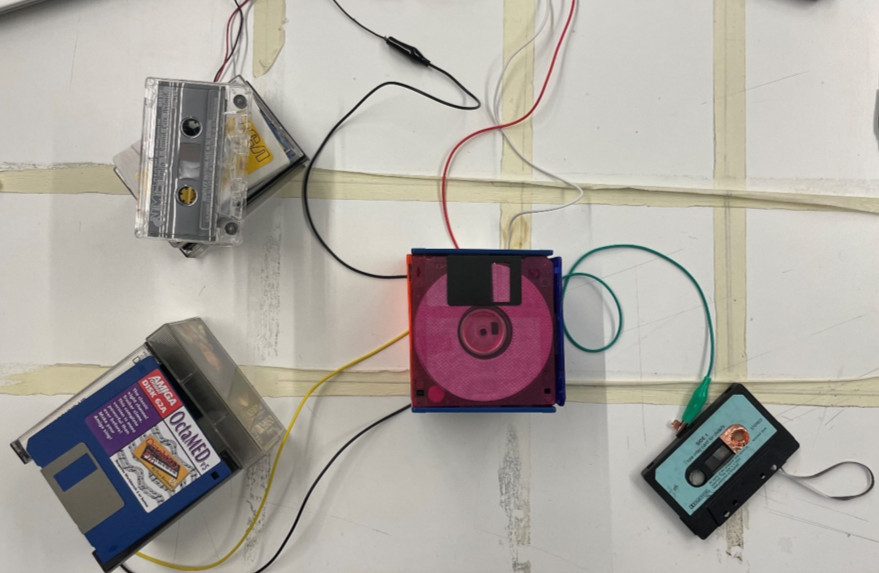
Following on from the previous post about the digital collage I made, I was asked to further develop the project by constructing a physical manifestation to compliment the theme of 'marching backwards into the future'. The device created needed to have at least two means of interaction, such as a button to push or a dial to turn. To create these interactions I had to apply software and circuity. I used an Adafruit Circuit Playground and Adafruit Make Code to achieve this.

My project was specifically concerned with the constant development of new electronic technology and the resulting obsolescence of older devices. When tasked with making use of preexisting materials from the outside world to construct this physical manifestation, I was fortunate to source several cassette tapes in local charity shops. In my digital collage, I had included various music players, one of which was a portable cassette player, a Sony Walkman. I knew I wanted to include different forms of old and outdated technology, so I decided to use these cassettes as a starting point for the design process.
I found a book in another charity shop called 'Those Radio Times' by Susan Briggs, published in 1981, it documented the history and development of early radio broadcasting. I took inspiration from this and thought it could be beneficial to incorporate another form of auditory device, one predating the cassettes. I was particularly drawn to the images of radio wave receivers from the 1920s. The incorporation of both sound and light could make for an interesting interaction.

Image taken from S. Briggs, ‘Those Radio Times’.
I used colourful, translucent floppy disks to create a light box for the Circuit Playground Express. I also found some old Amiga floppy disks used for music programming and sampling. I thought this helped link the musicality of the cassettes to the obsolete Amiga disks and their early computers, which featured in my first project.


Subsequent research into cassette tapes and their social and cultural history gave me more inspiration. I watched ‘Cassette: A Documentary Mixtape’ directed by Zack Taylor (2018), a documentary film presenting the significance of the cassette as a medium for mixtapes. In my initial project, I touched on the negative implications of losing the content stored within our obsolete tech. The art of creating a mix tape is largely lost nowadays, and the act of giving one as a gift to an admirer is too. Without a cassette player, the mixtapes are inaccessible, losing a small time capsule of past recordings and personal song curation.
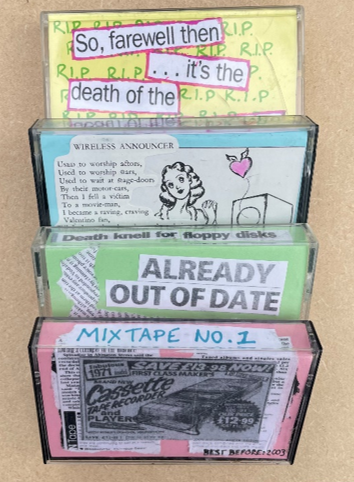
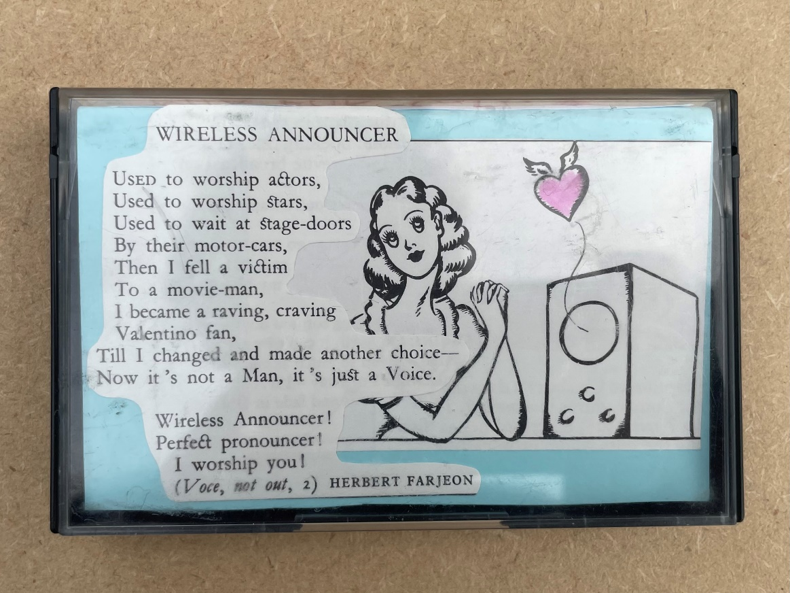
I was additionally inspired by the personal nature of mixtapes. They are usually hand-decorated and titled by the mixer. I adapted the cassette tapes by disguising them as mixtapes. I created my own covers for the cases, collaging newspaper clippings and pictures inspired by the materials I had found in my research. One case features an illustration and poem about changing media through time and its impact on social trends. The adoring fan switches her interests to match the newest trending media.
I designed the physical manifestation to have a few different interactions and used Adafruit MakeCode software and electric circuitry to achieve this. I experimented with different buttons and sensors and tested different lighting and colour arrangements. I created a button interaction using a floppy disk and made a box for it to sit on using the cassette cases. This was done to hide the original button and wiring. Initially a cassette tape was used to act as the button however this was swapped for a floppy disk as it was lighter and more stable.

I also created a dial using one of the cassette tapes, which can be rotated to either dim or illuminate the floppy disk light box. Originally this was fixed to a sliding dial, but I then decided to use a rotation sensor as it felt more physically stable and I thought the circular rotary motion was better linked to circular winding motion of the cassette tape.

I added a third interactive element involving touch. I liked the idea of incorporating a pen or a pencil to interact with the cassettes, as this was done originally to wind up loose tape or fast forward tapes manually to preserve a cassette player’s battery life. This action is iconic to cassettes, and as such creates an identifiable sense of nostalgia and encourages affordance, at least for those familiar with the action. I experimented with conductive tape and initially wrapped it around the middle of the cassette to see if it would successfully connect to the circuit board. To refine the appearance, I stuck the tape directly to the holes in the cassette where the tape can be wound from. The pencil or pen also needed to be conductive in order to communicate with the circuit board, so I wrapped a pen in the same tape. I also deliberately pulled out and unwound the tape from the cassette to encourage the user to insert the pen and wind the tape, triggering the interaction.

I originally had the cassette with the touch censor attached to the rotary dial, but I felt this was too cluttered. I decided instead to separate them into two separate interactions. I added a sound effect to the third interaction due to the auditory nature of the cassettes, and I felt that the ‘power up’ sound effect provided on Adafruit MakeCode could evoke a sense of existing life within the obsolete artefacts.
Once I was content with the three interactions and the circuitry was functioning successfully, I thought about how to display the light box and its controls in a cohesive way that could also hide the exposed wiring linking the button and sensors to the circuit board. I decided to make the physical manifestation appear as a box of old technology that you could find in household storage. I wanted to present the materials as being kept poorly and in a disorganised manner to reflect their largely forgotten status. The interaction is designed to encourage the user to reconsider these items – as they explore the box of ‘old junk’, it reveals it’s new function and shines a light within.

I used an old cardboard shoe box and adapted it with an inner compartment below a raised level to hide the wiring and keep the display tidy.

The creation of this physical manifestation has aimed to compliment my digital collage through an exploration of Marshall McLuhan’s ‘marching backwards into the future’. The Obsolete Memory Box encourages the user to reflect on old technology, hopefully inciting a sense of nostalgia or curiosity to interact with these now obsolete and forgotten devices. While they do not function as they would have during their heyday, the appropriated cassettes and disks have regained some functionality and tactility in an entirely different nature.

A short video showing the box in action:

Comments